
Cooking With Color Blindness: Freshness, Doneness & Kitchen Safety
2026-03-15 · Jamie Chen · 13 min read
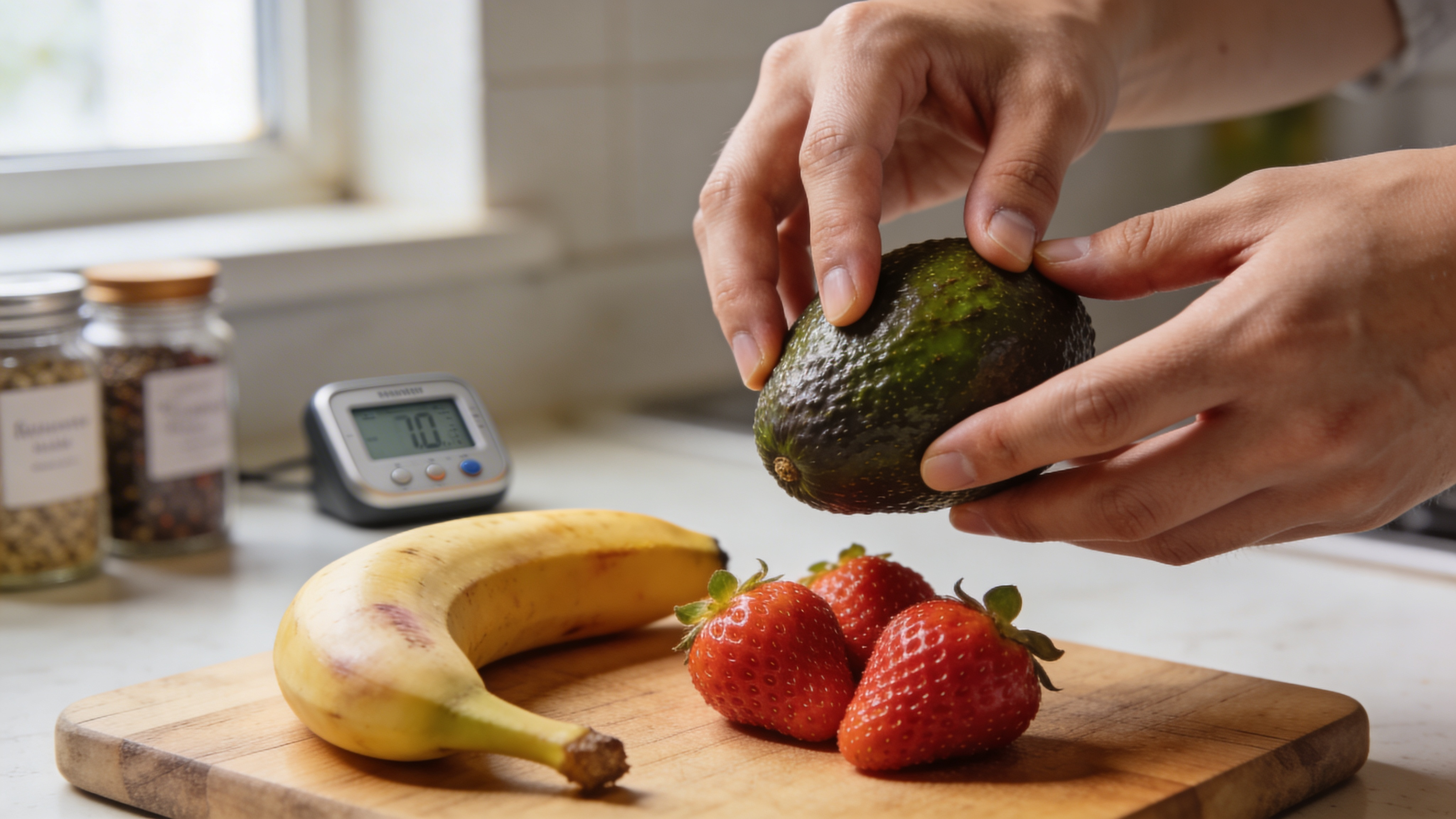
TL;DR: CVD changes how you judge freshness and doneness—screen your vision with a free color blind test if unsure.
My uncle used to eat undercooked chicken on a fairly regular basis before anyone connected it to his color vision. He wasn’t careless he was checking what he thought was the right color. The pink just didn’t look pink to him. It looked done.
That story isn’t unusual. Food is one of the most color-coded parts of everyday life, and we rarely talk about how that plays out for the roughly 8% of men and 1 in 200 women who have some form of color vision deficiency (CVD). The signals we rely on the blush of a ripe peach, the browning of bread, the red of a perfectly cooked steak are not equally readable by everyone.
This article is about the real, practical friction that color blindness creates around food: identifying what’s fresh, cooking things safely, navigating grocery stores and restaurants, and working around the systems that were designed with full-color vision in mind. If you have CVD and food has been a quiet source of confusion or embarrassment, this is for you.
Why food relies so heavily on color
Color is one of the oldest food signals we have. Long before sell-by dates or food thermometers, humans judged food safety and ripeness through visual cues: a green banana versus a yellow one, the gray-brown of spoiled meat, the char on cooked fish. These cues are deeply embedded in how we shop, cook, and eat.
For most people, this works automatically. They glance at a tomato and know whether it’s ready. They check the burger and see instantly whether it needs another minute on the grill.
For someone with red-green color blindness which covers both deuteranopia (green-blind) and protanopia (red-blind), the two most common types those same visual cues land differently or not at all. Red and green are precisely the colors that govern so much of what we eat: ripeness, rawness, mold, caramelization, freshness.
This isn’t a small inconvenience. It affects food safety, grocery shopping, cooking confidence, and even social situations like not being able to tell whether the wine is a red or rosé without picking up the glass.
The specific challenges CVD creates in the kitchen
Judging meat doneness
This is probably the highest-stakes food challenge for people with red-green CVD. The color cues for meat doneness from raw pink through medium to well-done brown sit squarely in the red-green spectrum.
For someone with deuteranopia or protanopia:
- Raw chicken and cooked chicken can look nearly identical in color
- A medium-rare steak and a well-done one may appear the same shade
- Ground beef that’s turned gray-brown from age can look the same as fresh red ground beef
- The redness of undercooked pork may not register as a warning
The fix here isn’t just “use a thermometer” though that genuinely is the best solution, and we’ll come back to it. The issue is that most cooking guidance is written around color. Recipe instructions say things like “cook until no longer pink” or “the juices should run clear.” Those instructions assume the cook can perceive those distinctions.
Identifying ripe produce
Ripeness cues span the entire color spectrum:
- Red-green cues: strawberries, tomatoes, watermelon, apples, peppers, chili peppers, avocados (when they shift from bright to dark green)
- Yellow-green cues: bananas, mangoes, pineapple
- Color intensity changes: peaches, plums, nectarines that deepen as they ripen
For someone with red-green CVD, a green strawberry and a ripe red one can be genuinely hard to distinguish by color alone. Same with a red apple versus a green one not just ripeness, but the variety itself may be unclear at a glance.
Tritanopia, which affects blue-yellow perception, creates different but equally real challenges: distinguishing the yellow-gold of a ripe banana from the green of an unripe one becomes harder, and the subtle bluing of some molds on cheese or bread may not be as visible.
Spotting mold and spoilage
This one matters for food safety and also for food waste. Mold comes in green, blue, pink, red, gray, and white and the subtle color differences that signal “this cheese has gone bad” or “these berries are starting to mold” can be invisible to someone with certain types of CVD.
People with red-green CVD often report difficulty distinguishing:
- Green mold on bread from the bread itself
- Pink or red mold on dairy
- The early gray-brown of oxidized fruit
- Slight discoloration on the edges of deli meat
The challenge compounds when food is in packaging, under artificial grocery store lighting (which frequently skews green), or mixed together in a container where context makes the color harder to judge.
Navigating grocery stores
Supermarket design is a masterclass in color-coded systems that assume full color vision:
- Produce sections rely almost entirely on color to differentiate items that are otherwise the same shape (red vs. green grapes, red vs. green cabbage, red vs. yellow onions)
- Meat displays use color to signal freshness the brighter red of “fresh” versus the darker, brownish-red of older meat
- Sale tags are frequently red or green against white, making the discounts genuinely hard to spot
- Nutrition labels use color coding for warning levels (red/amber/green traffic-light labeling, common in the UK) that can be entirely inaccessible
For UK readers in particular: the traffic-light nutrition labeling system used on many supermarket products is a real accessibility issue. Red means high in fat/salt/sugar, amber means medium, green means low. If you can’t distinguish red from green, that system gives you nothing useful.
Cooking with herbs and spices
This one doesn’t get talked about enough. Fresh herbs basil, parsley, cilantro, mint, chives are distinguished partly by shape but also by color, particularly the shade of green. For someone with severe red-green CVD, cilantro and flat-leaf parsley can be hard to tell apart by color alone in a busy grocery store or farmers market.
Similarly, spices like paprika, chili powder, and turmeric have color cues that indicate heat level and type but the difference between a mild paprika and a hot chili powder isn’t always legible from the jar color alone, especially under artificial lighting.
Practical strategies that actually work
Use a thermometer and know the numbers
This is the single most reliable replacement for color-based doneness cues. A digital instant-read thermometer removes the guesswork entirely. The key internal temperatures to know (in Fahrenheit and Celsius):
| Food | Safe internal temp (°F) | Safe internal temp (°C) |
|---|---|---|
| Chicken and turkey | 165°F | 74°C |
| Ground beef/pork/lamb | 160°F | 71°C |
| Whole beef/pork/lamb | 145°F | 63°C |
| Fish | 145°F | 63°C |
| Eggs | 160°F | 71°C |
| Leftovers | 165°F | 74°C |
A good thermometer costs $10 $25 and eliminates the entire category of “did I cook this right?” anxiety. Thermometers are not a CVD workaround they are objectively the most accurate method for everyone. You’re just using the best tool for the job.
Use texture and smell alongside sight
Professional chefs actually rely on color far less than food TV would suggest. Touch, smell, and time are the real cues:
- Meat: Properly cooked chicken feels firm, not soft and yielding. Raw chicken has a distinctly slimy texture. Ground beef, when fully cooked, becomes grainy rather than slippery.
- Fish: Cooked fish flakes easily with a fork and loses its translucency you can feel the texture change without seeing the color.
- Bread and baked goods: Tap the bottom of a loaf a hollow sound means it’s done. The crust texture changes from soft to firm.
- Vegetables: Roasted vegetables smell caramelized when they’re ready. Softening and slight wrinkling at the edges are reliable texture cues.
- Fruit ripeness: A ripe peach, plum, or mango gives slightly when pressed at the stem end. Smell is also a powerful indicator ripe fruit smells like fruit; unripe fruit smells like not much.
Label and organize your kitchen proactively
A lot of the confusion around herbs, spices, and similar-looking produce can be managed with simple organization:
- Store fresh herbs in separate, labeled containers in the fridge
- Write directly on spice jar lids with a marker when you buy them, noting heat level or type
- Organize produce in your fridge so you always know what’s where bananas in one spot, avocados in another, eliminating the guesswork when they’re similar shades to your eyes
- When buying multiple similar items (red and green apples, for instance), put them in separate bags at the store and label them at home
Use natural light when possible
Store lighting is generally bad for anyone trying to assess food color, and it can make CVD significantly worse. Natural daylight gives the most accurate color rendering. When possible:
- Assess produce color near a window rather than under fluorescent store lights
- Take produce out of the bag or package to examine it in better light
- If you’re unsure at the store, ask a store employee this is a completely reasonable thing to do
Know which specific color pairs cause you problems
Not all CVD is the same, and not all foods will present the same challenges for every person. Someone with mild deuteranopia might have no trouble with ripe bananas (yellow vs. green) but struggle significantly with strawberry ripeness (red vs. pink vs. green). Someone with tritanopia may have the reverse experience.
If you’ve taken a color vision test and know your CVD type, you can focus on the specific problem areas. You can even use a tool like the color blindness simulator to preview images of food under your specific CVD filter upload a photo of the grocery store produce section and immediately see what the visual difference between ripe and unripe tomatoes actually looks like through your specific type of color vision deficiency.
Apps and technology that help
Several smartphone apps can help identify colors in real time using the phone camera. These are useful for situations where you want a quick color readout without relying on your own perception:
- Color Grab (Android): Real-time color detection using the camera. Identifies colors and gives you names and values.
- Color ID Free (iOS): Points the camera at any object and reads out the color name. Works in real time.
- Microsoft’s Seeing AI: Primarily designed for visual impairment but includes a color channel that reads colors from the camera useful for food identification.
These aren’t perfect they work best in good lighting but they give you an objective second opinion that doesn’t depend on your color perception.
Social situations and eating out
This is the part that often goes unspoken: the awkward moments at restaurants, dinner parties, or even just grabbing food at a work event.
A few honest observations from conversations with CVD users:
- At restaurants: Ordering by description rather than color is almost always fine. Ask your server “which one is the spicy one?” or “can you tell me which salad has the blue cheese?” these are normal questions.
- At dinner parties: If you’re not sure what you’re picking up off a charcuterie board, go for texture cues. Harder cheeses, softer ones, crackers, fruit the tactile difference helps.
- Buffets with heating lamps: Industrial food warmers with their orange/red heating lamps make meat color nearly impossible to read even with full color vision. Default to texture and heat cues.
- At friends’ homes: If someone’s cooking and you genuinely can’t tell whether a dish looks right to you, a quick “does this look done to you?” is a completely reasonable question that doesn’t require explaining your CVD if you don’t want to.
Food safety and CVD: what the research says
There isn’t a large body of published research specifically on CVD and food safety outcomes, which is a gap worth naming honestly. What we do know:
- The USDA and FDA both anchor food safety advice heavily in visual color cues language like “cook until no longer pink” appears throughout official guidance
- Color-based safety signals are widely recognized as a single point of failure even for people with full color vision (meat can appear cooked while still containing pathogens if the myoglobin has denatured without reaching safe temperature)
- Food safety educators increasingly recommend thermometers as the standard not a backup for meat doneness
The practical takeaway is that the strategies above (particularly thermometer use) are not just CVD accommodations. They’re just objectively better food safety practices. You’re not doing something unusual; you’re doing what professional kitchens actually do.
When to get a formal color vision assessment
If you’ve been managing food-related color confusion informally and you’re not sure whether you have CVD or which type, getting a proper assessment is worth doing. This is especially true if:
- You’ve noticed consistent difficulty distinguishing between specific colors in food contexts
- You’ve had food safety concerns related to color misidentification
- You have children who may have inherited CVD (it’s X-linked, meaning it’s more common in males and passed from mothers to sons)
A formal color vision test is typically available through an optometrist or ophthalmologist. In the US and UK, many opticians offer it as part of a standard eye exam. Some workplaces (particularly those with color-dependent job requirements) also offer testing.
An online screening test isn’t a substitute for a clinical diagnosis, but it’s a reasonable first step. If you haven’t been tested and want a baseline sense of where you are, the free color blind test at DeficiencyView uses an Ishihara-style format to screen for the most common types of CVD results in under two minutes, no account required.
For children: if a child is struggling with school activities involving color (art, science labs, reading maps) or seems to have food-related color confusion, it’s worth raising with their pediatrician. Color vision testing can be done from around age 4.
Frequently asked questions
Can color blindness affect your sense of taste?
Color perception and taste perception are separate systems, so CVD doesn’t directly affect how food tastes. However, research in food psychology (including work by Charles Spence at Oxford) has shown that color expectations influence perceived flavor in sighted people we expect red to taste sweet, green to taste fresh or sour, and so on. Someone who processes colors differently might have subtly different flavor associations, though this is an area with limited CVD-specific research. Your sense of taste itself isn’t impaired by CVD.
Is it safe to cook with red-green color blindness?
Yes, absolutely. Cooking safely with red-green CVD is straightforward once you replace color-based cues with more reliable alternatives: use a food thermometer for meat, rely on texture and smell for doneness cues, and know the safety temperatures. Millions of people with CVD cook safely every day. The key is using methods that don’t depend on the color signals you may not be reading accurately.
What types of CVD create the most food-related challenges?
Red-green color blindness which includes deuteranopia (most common), protanopia, deuteranomaly, and protanomaly tends to create the most significant food challenges, because so many ripeness and safety cues sit in the red-green spectrum. Tritanopia (blue-yellow) creates different but equally real challenges, particularly with yellowing/greening fruit and some mold colors. Achromatopsia (complete color blindness, very rare) creates the broadest challenges, as all color-based food cues are unavailable but people with achromatopsia typically develop robust compensatory strategies.
Are there any kitchen tools specifically designed for CVD users?
Not many are marketed specifically for CVD users, but these tools are genuinely useful: instant-read digital thermometers, smell-based ripeness guides, apps that read color from the camera, and tactile produce guides. Some smart kitchen devices (like Bluetooth thermometers with clear numeric readouts) are more accessible than analog dial thermometers. Labeling systems with tactile markers or bold black-and-white text are also helpful for organizing spices and pantry items.
How do I explain my food color challenges to family members or housemates?
The most effective approach is concrete and specific: “I can’t reliably tell when meat is cooked just by looking at it can we make sure there’s a thermometer in the kitchen?” or “I struggle to tell ripe from unripe by color alone, so I go by smell and texture.” Most people respond well to specific, practical requests rather than a general explanation of color blindness. You don’t owe anyone a full explanation, but giving a housemate or partner one or two specific examples of where you’d appreciate an extra check makes it easier for them to help in ways that actually matter.
Getting your color vision properly assessed
If you’re cooking with consistent color uncertainty and you’ve never had a formal color vision test, that’s worth changing. Knowing your specific CVD type helps you understand exactly which food color cues will be difficult and which won’t, so you can focus your compensatory strategies where they’re actually needed rather than everywhere at once.
You can start right now with the free Ishihara-style color blind test at DeficiencyView it takes about two minutes, covers the most common CVD types, and gives you an immediate result you can bring to an eye care appointment for follow-up.
Related articles
- How to interpret your color blind test results
- Color blind simulator guide: using a simulator for accessible design
- Designing for deuteranopia: a testing guide