
How Color Blindness Affects Outdoor Activities & Sports: Practical Adaptations
2026-03-18 · Jamie Chen · 12 min read
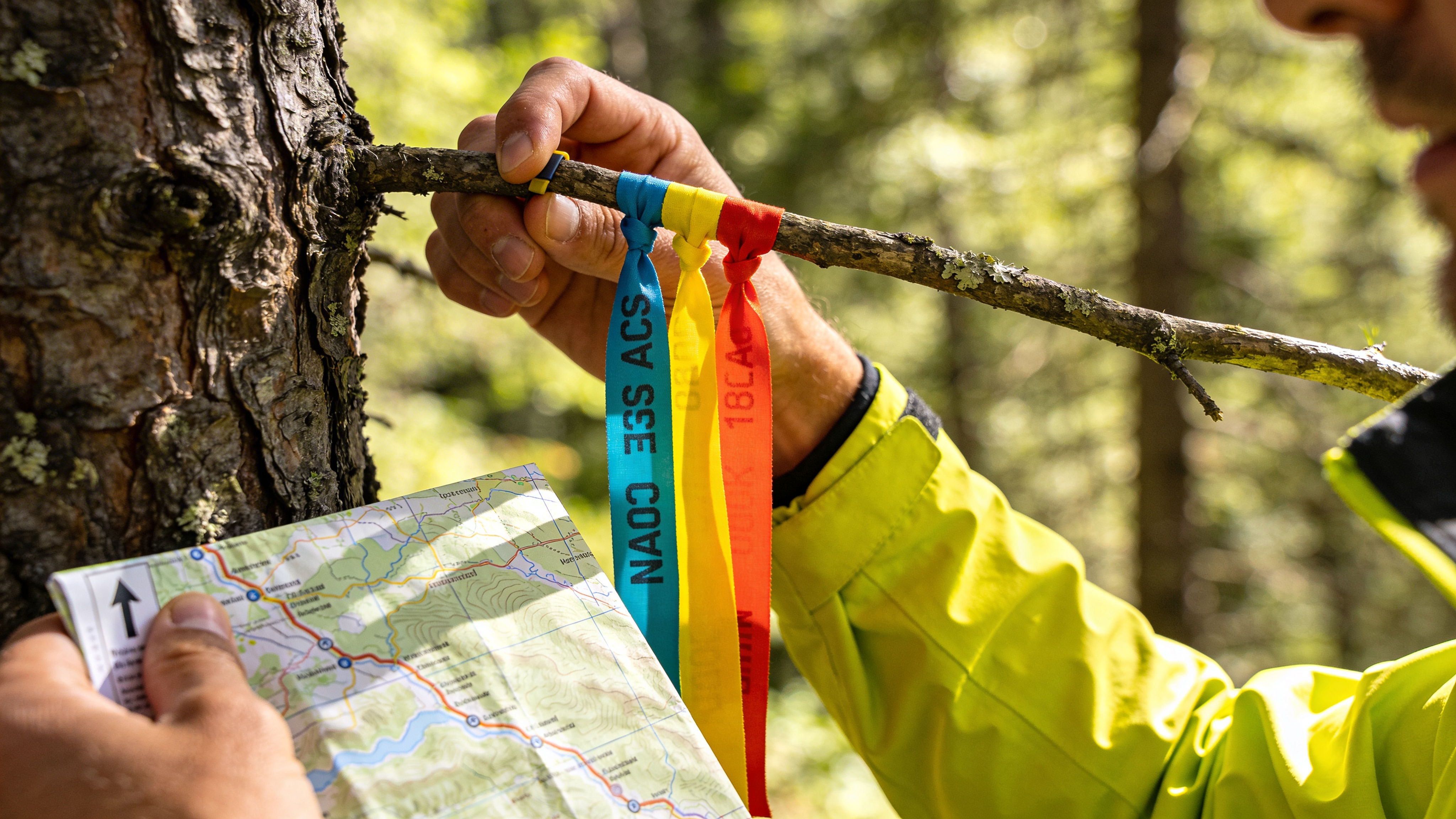
TL;DR: Trail markers and team colors can fail for CVD—know your baseline with a free online color vision test.
A few summers ago, I got a message from a runner named Marcus. He’d been training for a trail half-marathon, and during a weekend practice run, he realized he couldn’t reliably spot the colored ribbon markers on the course. They all looked like the same muddy brown to him. He’d gotten lost twice not dangerously, but enough to shake his confidence.
“I didn’t think color blindness mattered outdoors,” he wrote. “But I guess it matters everywhere.”
He’s not alone. Color vision deficiency affects roughly 8% of men and 0.4% of women, and most of those people are active they hike, fish, play sports, climb, bike, and compete. The thing is, outdoor environments are full of color-dependent cues that we rarely think about: trail markers, water conditions, weather patterns in the sky, team uniforms, equipment, fishing lures, rock climbing holds, and competitive scoreboards.
The challenges are real. But so are the solutions and they’re simpler than you might think.
Understanding color blindness and outdoor challenges
Before diving into specific activities, it helps to understand what’s actually happening visually.
Color vision deficiency isn’t one condition it’s a range. The most common forms are red-green color blindness (protanopia and deuteranopia, affecting about 1 in 12 men) and blue-yellow color blindness (tritanopia, much rarer). Each affects how you perceive the outdoor environment differently.
If you have protanopia, reds and greens both read as shades of yellow or brown. That means:
- A red trail marker looks identical to the green foliage around it
- A red apple in long grass is invisible
- Sunsets lose their drama (they’re still orange and yellow, but the red dimension vanishes)
- Traffic lights become harder to interpret, especially at dusk
If you have deuteranopia, you have a similar challenge but with a different color skew greens appear more brownish, and the overall palette shifts toward blue and yellow.
With tritanopia, blues and yellows shift or invert, which is rarer but creates distinct problems in environments with water (where sky-to-water contrast matters for depth perception).
The second thing to understand: outdoor environments don’t have backlit, high-contrast displays. Colors fade, shadows shift, and lighting conditions change constantly. A trail marker that’s visible in morning sun might disappear in afternoon shadow. Water that looks green at the shore might look gray or blue fifty yards out. None of this is a design flaw it’s just how nature works. And when you add color vision deficiency into that, you’re adding an extra layer of uncertainty.
Trail activities: hiking, trail running, and orienteering
Hiking is probably the outdoor activity most affected by color blindness, simply because trail systems rely so heavily on color-coded markers.
The standard system in most North American parks uses painted blazes or tied ribbons:
- Red blazes: Often indicate main or primary trails
- Blue blazes: Secondary trails or alternative routes
- Yellow blazes: Junctions or starting points
- White blazes: Major through-trails (like the Appalachian Trail)
- Green blazes: Shorter loops or connector trails
If you have protanopia or deuteranopia, red and green markers collapse into each other. Blue stands out. Yellow stands out. But red and green? They become nearly indistinguishable from tree bark, soil, or dead leaves.
Practical solutions:
-
Always carry a physical trail map not just on your phone. Paper maps work without batteries, and you can correlate mile markers, elevation gain, and terrain features with your position rather than relying solely on color markers. Use a waterproof map case.
-
Use a GPS or mapping app Apps like AllTrails, Gaia GPS, or standard mapping on your phone let you see your exact location and distance traveled. This is a backup if you miss a marker, and it’s valuable even for people without CVD.
-
Ask local park rangers about marker patterns Many parks use patterns in addition to color. Blazes might be rectangular (main trail), square (secondary), or diamond-shaped (junction). Ask about these when you visit, or call ahead.
-
Hike with a partner who has typical color vision This isn’t a workaround for you to learn it’s just practical. Your partner spots the marker, you cross-reference with your map, you both move forward. You contribute navigation, pace regulation, safety awareness, and decision-making.
-
Wear a bright, distinctive color This matters for your safety, not navigation. Wear a bright yellow or orange jacket, pack, or vest so you’re visible to other hikers and especially to hunters during hunting season.
-
Test your actual limitation before a big trip Not all people with the same CVD type experience color blindness identically. Severity varies. If you’re planning a multi-day backpacking trip or a challenging summit, do a practice day hike on a marked trail to see exactly where you struggle and where you don’t. You’ll gain real confidence and identify the adaptations that actually work for you.
For trail running and orienteering, the same principles apply, but speed is a factor. Trail runners can’t stop to consult a map every few minutes. If you’re a competitive orienteer, you’ll need to:
- Pre-run the course if possible
- Memorize topographic details (ridgelines, stream crossings, elevation profiles) rather than color
- Practice orienting the map to the terrain constantly
- Consider informing race organizers about your CVD some events offer alternative markers or guidance
Water sports: fishing, kayaking, and swimming
Water presents a different challenge. The water itself doesn’t have intrinsic color it reflects the sky and absorbs wavelengths as it gets deeper. People with color vision deficiency often struggle to gauge water depth, currents, and wave characteristics because so many of those cues are color-based.
Fishing is one of the most color-dependent water sports. Lures, flies, and bait selection all rely on matching colors in the water. A red fly might disappear into red autumn leaves reflecting off the surface. A bright green lure might blend with algae-heavy water. And reading the water itself spotting ripples, shallow areas, and fish shadows becomes harder when color perception is limited.
Practical solutions for fishing:
-
Use lure shapes and sizes rather than colors The action of the lure (spinning, darting, wobbling) is actually more important than color for triggering strikes. Focus on size (matching the natural prey) and movement patterns. Ask local guides or fishing forums about what’s working, then buy lures by description: “3-inch spinner,” “small nymph,” rather than “red wobbler.”
-
Ask guides about water conditions Professional fishing guides already talk to each other about water color, clarity, temperature, and what’s biting. If you’re paying for a guide, tell them you have color blindness and ask them to describe the water conditions verbally and describe what successful lures look like by shape, not color.
-
Fish early morning or late evening Low-angle sunlight creates stronger shadows and clearer structure cues. You’ll see underwater features more clearly than in midday, when color is the dominant visual cue.
-
Use contrast-heavy equipment and markers Wear high-visibility orange or yellow gear so you’re visible to other boats. Mark your tackle box and line with tactile labels or contrasting patterns (black and white stripes) rather than relying on colored tape.
-
Learn to read water by pattern and reflection, not color Current lines, breaks in the surface, subsurface structure these all create patterns and movement that you can read without perfect color perception. Spend time just watching water, learning how wind, depth, and obstacles shape its surface.
For kayaking and open-water swimming:
- Wear a bright PFD (personal flotation device) yellow, orange, or bright white are ideal
- Use a tethered whistle or signaling device, not just visual signals
- Bring a friend or join a group activity (never kayak solo if you have CVD)
- Practice in familiar water before attempting open water or white water
- If paddling in fog or low light, use GPS and visual markers that aren’t color-dependent (buoys with shapes, GPS coordinates)
Team sports and competitive activities
Team sports introduce a different variable: uniform color.
Soccer, basketball, baseball, and football all rely on players wearing contrasting uniform colors to distinguish teams. If you have red-green color blindness, a red team and a green team become impossible to tell apart at speed. Even in casual play, this creates anxiety and confusion.
Real-world impact: A US high school athlete with deuteranopia told me that in freshman year, he struggled in soccer practice because he genuinely couldn’t distinguish between the team wearing red bibs and the team wearing green bibs. After about ten minutes, he’d figure it out from formation and player recognition, but those first minutes of every drill were disorienting. He’s now a college athlete, and the issue doesn’t come up because college uniforms use higher-contrast, non-red-green combinations.
Practical solutions for team sports:
-
Advocate for non-red-green uniform combinations If you’re part of a team, school, or league, suggest using uniforms that contrast by lightness and pattern, not just color. Red + blue, yellow + black, white + navy these work for everyone, including people with color blindness. This is actually a WCAG accessibility principle; many sports organizations don’t know it applies to them.
-
Wear a personal number or identifier A high-visibility armband or jersey number that’s clearly visible helps teammates recognize you. Some sports allow this; some don’t. If your sport allows it, use it.
-
Play in familiar positions or roles If you’re a goalkeeper or play a position where you control a smaller space, you’ll rely less on instantly identifying all players by uniform color. If you play midfield or defense in soccer, you need to track all eleven teammates and eleven opponents constantly that’s where color blindness hits hardest.
-
Let coaches and teammates know Most coaches don’t realize one of their players has color blindness until something goes wrong. Mentioning it upfront helps them understand if you ask for clarification on which team is which during drills, or if you make occasional mistakes reading the formation.
-
Watch clips before games If you’re playing competitively, watch game footage before match day so you see the actual uniforms, lighting, and field conditions. Your brain will process the spatial relationships faster than you can process color in real-time.
Rock climbing and technical outdoor activities
Rock climbing has color-coded holds and routes. In a gym, holds are painted different colors red for beginners, blue for intermediate, black for expert, and so on. Outside, natural rock doesn’t have this luxury, but some areas have painted routes or color-coded bolts for established climbing areas.
If you have color blindness, a color-coded gym becomes a problem. A red route and a green route might look identical to you, and trying to work a problem when you can’t clearly distinguish which holds are “on” for your route is frustrating and potentially unsafe (if you’re following the wrong route, you might run out of holds or end up in an unintended position).
Practical solutions for climbing:
-
Ask gym staff about hold shapes Most modern climbing gyms use holds that differ not just in color but in texture and shape. Beginners might be on rounded jugs, intermediate on crimps, advanced on slopers. Ask staff which shape corresponds to your route, then focus on shape rather than color.
-
Request an alternative route description Gyms may be able to describe your route by location or number rather than color. “Red route starting at the wall’s left edge” becomes “Route 4, left-side start.”
-
Outdoor climbing: Know the bolts and anchors Bolts and anchors are usually standard metallic silver or red, regardless of route color. Learn to navigate by bolt sequence and terrain features. Ask the person you’re climbing with to describe each section.
-
Take a beginner lesson when trying a new gym Instructors can immediately see your color blindness during a trial climb and help you develop a system with staff. This is way easier than trying to figure it out yourself.
Seasonal and weather-based challenges
Outdoor environments change dramatically with seasons and weather, and color is a key signal for many of those changes.
Spring and summer: Green dominates. For someone with deuteranopia, the entire landscape can become a monochromatic yellow-green blur, making trails and features harder to distinguish.
Fall: Red and orange leaves create a saturated color environment. Someone with protanopia might actually find fall easier to navigate because red leaves aren’t confusing they just blend into the broader yellow-orange palette, and the blue sky and yellow foliage create stronger contrast.
Winter: Snow is a cheat code for color blindness. With most of the landscape white or gray, color cues almost disappear entirely. You navigate by shape, shadow, and contrast which might actually suit you better.
Storm conditions: Dark clouds, heavy rain, poor visibility these eliminate color as a useful cue anyway. If anything, you’re on more equal footing with everyone else during bad weather.
When to seek professional guidance
If you’re considering taking up a new outdoor activity or competing in sport and you suspect you might have color blindness, get a formal screening. It’s not just about confirming you have CVD it’s about understanding which type and what severity.
A doctor or eye specialist can:
- Confirm whether you have color blindness using an Ishihara test or other validated screening
- Identify the specific type (protanopia, deuteranopia, tritanopia, or achromatopsia)
- Assess severity (some people have partial color blindness rather than complete)
- Discuss whether it affects your ability to drive safely or compete in regulated sports
- Recommend gear or adaptations specific to your visual profile
If you’re a competitive athlete, you might also want to check your sport’s official rules about color blindness. Most don’t restrict participation, but some (like aviation) do have specific requirements.
Practical gear recommendations
For all outdoor activities:
- Bright outer layer: Wear yellow, orange, or white on top so you’re visible. These are high-contrast to most backgrounds.
- GPS device or phone with offline maps: Never rely solely on color markers.
- Whistle or signaling device: For emergencies or communication when visual signals are ambiguous.
- Headlamp with colored filters removed: Standard white light works better than red light for navigation when you have CVD.
- Written route notes: If you’re doing a route others have done, search online for written descriptions of landmarks and distances.
For water activities:
- High-visibility PFD: Bright yellow or orange.
- Tethered whistle: Audible signal for emergencies.
- Contrasting gear: Black bag on white deck; white cooler on dark boat hull.
For team sports:
- Personal number or armband: Helps teammates recognize you.
- Talking and communication: Use your voice constantly so teammates know where you are.
FAQ
Can I still compete in organized sports with color blindness?
Yes. Most sports don’t have restrictions based on color vision. You’ll need to advocate for yourself let coaches and teammates know, and participate in practice so you understand the visual patterns of your sport. Competitive swimming, running, cycling, and climbing are all pursued by athletes with color blindness. Team sports are harder because uniform color is an issue, but it’s doable.
Does color blindness affect depth perception outdoors?
Not directly. Depth perception relies on binocular vision (two eyes), motion parallax, and aerial perspective (atmospheric haze making distant objects less distinct). Color helps with some of these cues, but it’s not primary. That said, in water, color cues do contribute to depth judgment, which is why people with CVD sometimes misjudge water depth.
Should I tell people I have color blindness before starting an outdoor activity with them?
Absolutely, especially for water activities or climbing. Telling a hiking partner is helpful but not critical if you have a map and GPS. For anything with speed, water, or height, tell them upfront so they can help you and adjust their expectations.
Are there outdoor sports I should definitely avoid?
Competitive white-water rafting or kayaking in bad conditions is risky without a partner who can monitor water conditions. Similarly, competitive orienteering relies so heavily on reading color-coded terrain that it’s very difficult with CVD (though not impossible some orienteers with color blindness compete by memorizing terrain shapes). Team sports that use red-green uniforms are frustrating, but not unsafe.
Will I eventually adapt to color blindness in outdoor environments?
Your color perception won’t change, but your navigation skills will improve dramatically. After your first ten hikes or runs, you’ll get much faster at reading maps, spotting patterns, and working with a partner. It becomes second nature.
The practical reality
Color blindness is a real constraint in outdoor activities, but it’s not a barrier. Thousands of people with CVD hike, fish, climb, and compete every year. The difference between being frustrated and being confident comes down to:
- Understanding your specific type and severity
- Planning ahead (maps, gear, communication)
- Learning to read non-color cues (terrain, shadows, patterns, distance)
- Telling people you trust what you can and can’t do
- Practicing in low-stakes environments before attempting high-stakes activities
If you’ve never been screened for color blindness and you’re noticing trouble with trail markers or water conditions, take a moment to test your color vision with our free Ishihara-style color blind test it takes about two minutes and gives you real clarity about what you’re dealing with.
Related Articles
- Free color blind accessibility tools compared
- How to interpret your color blind test results
- Testing your website for color blindness
Get a clear picture of your own color vision with DeficiencyView’s free color blind test Ishihara-style results in under two minutes, no login required.